
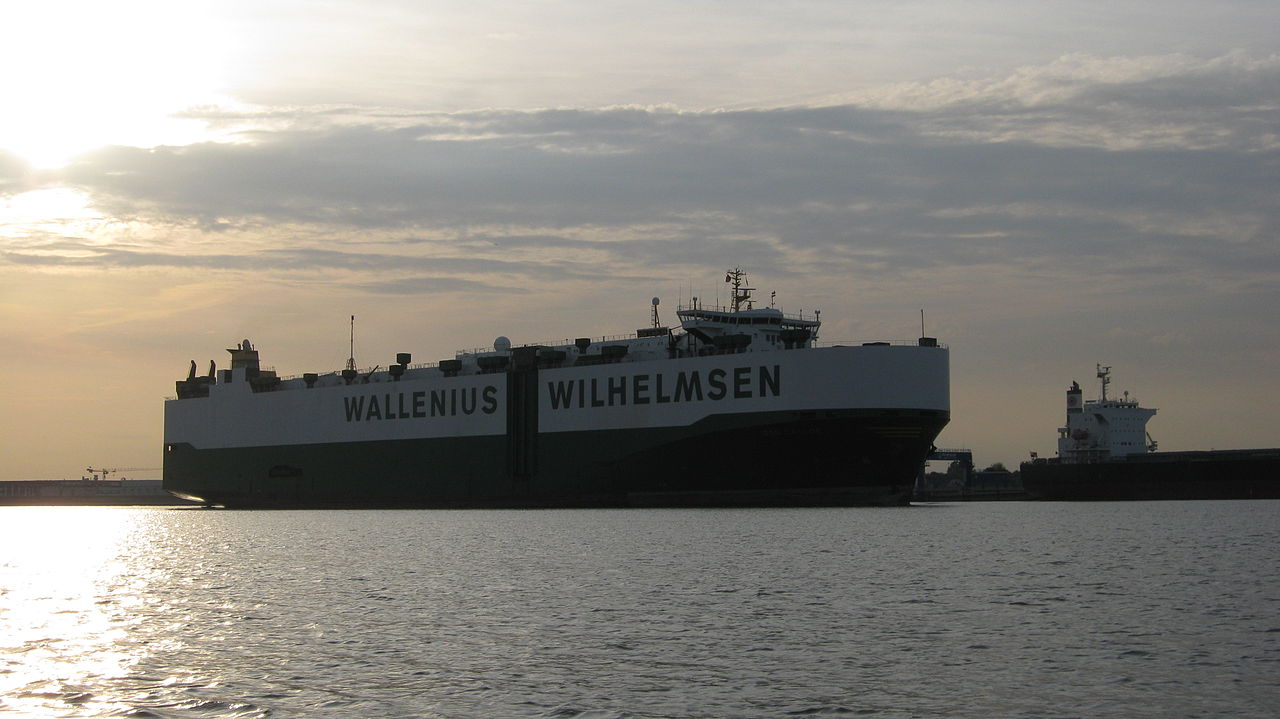
Pure Car & Truck Carriers
Project Type
SPS Deck Strengthening
Location
Hyundai Vinashin Shipyard, Vietnam
Date
2006-2007
Team
Keppel Shipyard
V-Ships Seasquad

SPS Deck Strengthening
Hyundai Vinashin Shipyard, Vietnam
2006-2007
Keppel Shipyard
V-Ships Seasquad
©Wikicommons
Cargo flexibility in car carrier operation, a shortage of global shipbuilding capacity and high newbuilding prices were some of the factors that prompted Wallenius Lines to lengthen and strengthen the main decks of three identical DNV-classed pure car and truck carriers (PCTC) – Don Carlos, Don Quijote and Don Pasquale.
Wallenius Lines operates three identical 22,615 dwt sisterships, each with 13 decks. Each vessel originally carried 5,873 car equivalents (RT43): 2,949 cars and 488 trucks.
Wallenius Lines recognised that inserting a new 28-metre midship section into each vessel increased carrying capacity by more than 20%. Across three vessels, the modification effectively added cargo space equal to one new PCTC. The company also wanted to strengthen the main decks to increase loading flexibility. That’s where SPS came in.
SPS Technology applied its overlay system to strengthen the main decks during the lengthening project at Hyundai Vinashin shipyard in Vietnam. The strengthening project had to align with other repair work and fit within the overall 38-day timeline.
SPS Technology partnered with VShips and Keppel Shipyard on the project, managing the work carefully. They ensured SPS work happened alongside other repair projects.
As the ships sailed from Australia and South Africa to Nha Trang, Vietnam, V-Ships SeaSquad riding gangs blasted and prepared the deck areas. At the yard, Hyundai Vinashin personnel completed the SPS steelwork while simultaneously performing the lengthening operation. Keppel personnel provided injection engineers who worked alongside SPS Technology personnel.


Strengthening the decks with SPS meant the vessels could carry heavier bogie loads, going from 25 tonnes (15 t axle) to 60 tonnes (30 t axle). This reinforcement made the deck loading more flexible, enabling operators to carry the same heavy cargo across the entire deck length.
The team used finite element analysis to evaluate stresses and confirm the design met requirements. SPS 8-25-E strengthened the deck plating to support the increased wheel loads from 60-tonne bogies, while reusing the existing deck plate. HP320x12 bulb flat riders were added on every third longitudinal stiffener. This kept all stresses in the below-deck stiffening and framing structure within Lloyd’s Register limits. Lloyd’s Register approved the SPS design before we began work.
The speed of deck strengthening stands out. Each SPS project took just 15 days; well within the 35-day schedules for the vessels’ Special Surveys and hull extension work.
SPS deck strengthening kept the existing steel structure intact. Other work continued in adjacent spaces without delay. This mattered greatly on the three car carriers, where crews performed deck strengthening alongside various conversion and repair procedures.
For the latest on our ground-breaking technology, follow the SPS Technology LinkedIn page and subscribe to our YouTube channel.

© 2026 SPS Technology. Web Design & Marketing by Five O’Clock Creative.


